
Probably Stolen Walkthrough: Route, Milestones and Ending
A spoiler-light Probably Stolen walkthrough: the opening week, rent and reputation gates, machine upgrades, NPC stories and the shop-buyout ending.
Probably Stolen does not hand you a quest log with numbered chapters. The story is delivered through customers, rivals, officials, and the shop itself, while the actual progression is economic: pay rent, build a product line, protect your reputation, and eventually buy the building. That makes a useful walkthrough less about “go here next” and more about the order in which you solve problems.
This route is spoiler-light. It names the milestones and the decisions that matter, but it does not script every conversation. For the first hour, use the beginner guide→. For the final purchase, use rent and shop buyout→.
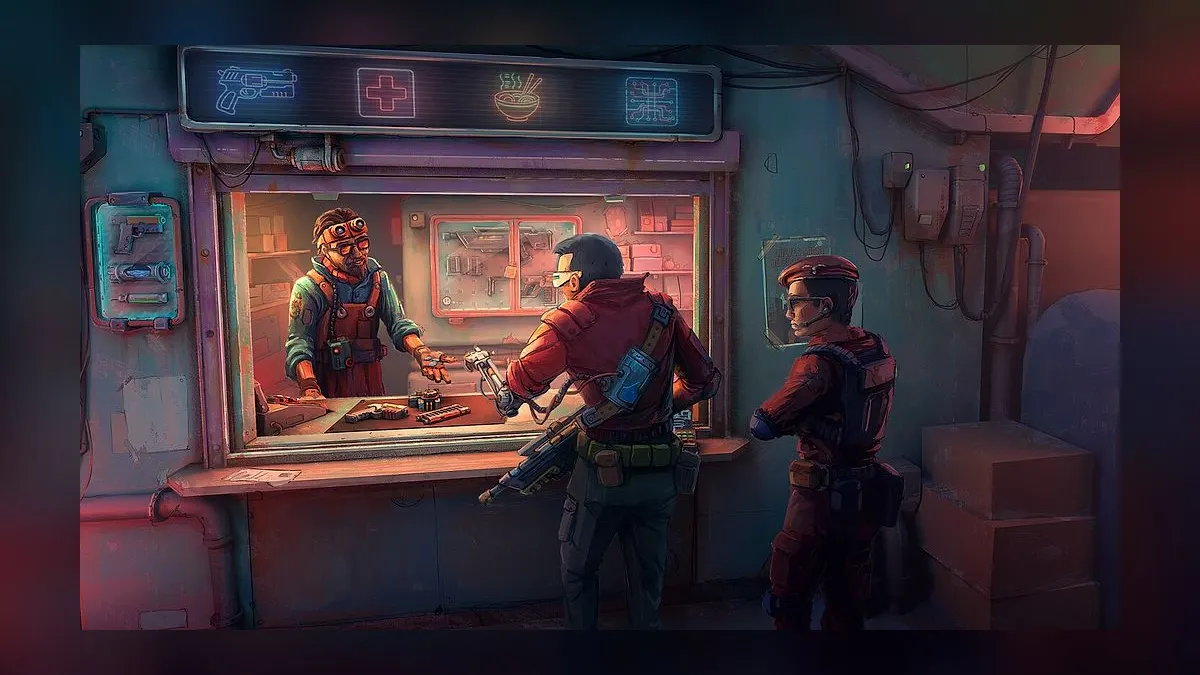
Every phase below is bounded by a rent payment. If a plan does not improve your ability to make the next payment, it is not progress yet.
Phase 1: survive the first week
Your starting scenario decides the opening kit, not the ending. The nine official starts range from Apprentice and Water Merchant to Fence, Gunsmith, Chemist, Hydroponic Farmer, Aquafarmer, Rat Wrangler, and Rock Bottom. Two players can therefore have completely different first days and still follow the same broad route.
The first-week checklist is short:
- Read the rent timer and write down the amount due.
- Sell the stock you already own before buying speculative stock.
- Pick one repeatable income line and learn its failure mode.
- Keep a rent reserve that you do not spend on inventory.
- Learn appraisal well enough to reject bad buys.
Water and appraisal flips are the safest teaching lines because both have visible checks. Water teaches contamination and testing; appraisal teaches material, condition, and counterfeit markers. The money guide→ explains the margin math, and the appraisal guide→ covers the item checks.
Do not start chemistry, guns, or a second production line in week one unless your scenario already supplies the equipment. Those lines have higher ceilings, but they also lock up capital and add inspection risk before you have a cushion.
Phase 2: build one reliable engine
By the second week you should know which customer type pays your rent. The goal now is repetition, not variety. A single clean water line, a single appraisal flip loop, or a single crop-to-food chain is enough to stabilize the shop.
The milestones in this phase are:
| Milestone | Why it matters |
|---|---|
| Rent paid without selling emergency stock | You have a real margin, not a one-off lucky sale |
| One machine running a full cycle | The production loop is understood end to end |
| Storage separated by product type | You stop losing stock and time |
| First reputation decision made | Legal, grey-market, or criminal identity starts to matter |
| At least one repeat customer | Demand is becoming predictable |
Machines are the main capital upgrade. A machine is only worth buying when you can feed it, power it, and sell the output without borrowing from rent. The machinery guide→ covers the machine types; the modules guide→ explains why module layout changes yield and loss.
Reputation is the other engine. Security attention, black-market trust, and customer perception pull in different directions. You do not need to max every faction. You need to know which one your product line depends on. The reputation and factions guide→ maps the trade-offs.
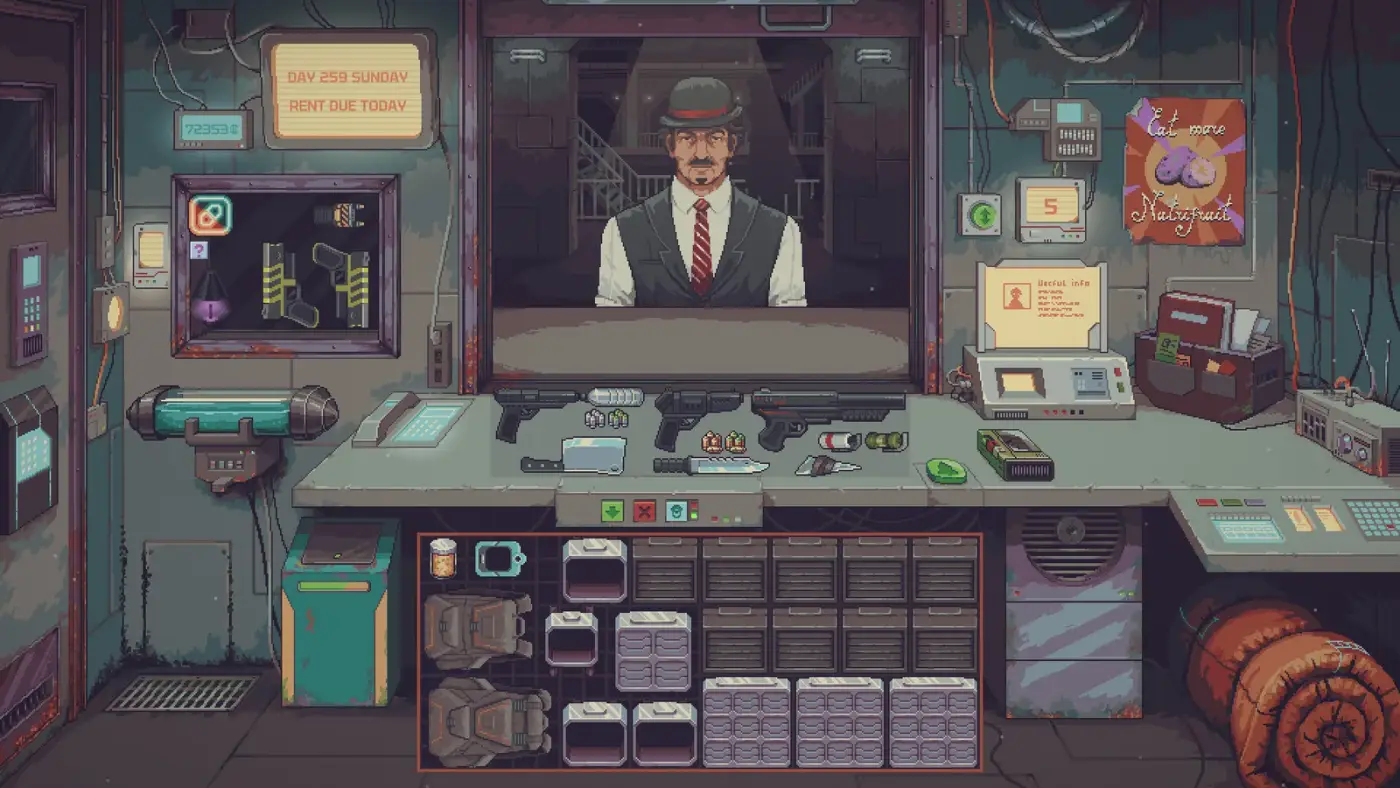
Phase 3: convert cash into capacity
Once rent is comfortable, the run shifts from survival to capacity. This is where most players either snowball or stall. The useful question is not “what else can I sell?” but “what is my current bottleneck?”
Common bottlenecks and their fixes:
| Bottleneck | Fix | Trap |
|---|---|---|
| Not enough stock | Add a second production cycle | Buying stock you cannot appraise |
| Stock arrives too slowly | Upgrade machine modules | Expanding before the input chain is stable |
| Customers do not see the good items | Improve display and layout | Filling the window with low-margin clutter |
| Trips and errands eat the day | Batch tasks and use delivery options | Buying convenience before profit |
| Inspections keep confiscating goods | Separate risky stock and review permits | Hiding contraband in the sales floor |
Display space and storage are throughput upgrades, not cosmetic ones. A better window sells the stock you already paid for. A better storage layout reduces the time between “customer asks” and “item is on the counter.” The storage and inventory guide→ and the shop layout guide→ cover both.
This is also the right time to decide whether to stay legal. Permits and licensed goods cost money but reduce inspection risk. Contraband raises margins but adds confiscation and reputation risk. Neither path is wrong; drifting between them without a plan is.
Phase 4: the people around the shop
The 1.0 release includes ongoing storylines around characters such as Lou, Eleanor, Officer Lun, and cadet Serpico. These are not a separate campaign. They arrive through shop visits, requests, and faction pressure, and they can change how a run feels without changing the buyout condition.
The official material does not publish a full trigger list or a quest tree, so any guide that promises “the correct order for every NPC quest” is guessing. Treat NPC requests as opportunities with a cost: time, stock, reputation, or risk. If a request asks you to give up rent money, it is usually a trap unless the reward directly improves your income.
The customers and requests guide→ explains how demand and special orders work. The crime and investigation guide→ covers the cases where a friendly conversation can turn into a Security problem.
Phase 5: buy the shop
The buyout is the confirmed win condition. You need enough estimated total wealth and the deed requirement, then you purchase the building. The price is not a universal number; it scales with the property and difficulty. A community screenshot shows a 14,600-credit buyout, but that is one save, not a target.
Estimated total wealth includes cash, inventory, and property. That means a shop full of valuable stock can be closer to the deed than its cash balance suggests. It also means you should not liquidate everything at the last minute just to see a bigger cash number.
Before you trigger the buyout:
- Pay the current rent and keep the reserve intact.
- Clear confiscation risk from the sales floor.
- Check that your best stock is appraised and priced.
- Finish any NPC thread you care about; the run ends at the buyout.
- Decide whether you want Endless Mode afterward.
Endless Mode is a separate toggle on the difficulty screen. It lets you keep playing after the normal win condition, which is useful for testing machines and prices. The endings guide→ explains the results screen and what each stat means.
The 1.0 build's documented win ending is the buyout. The route can be legal, criminal, production-focused, or social, but the sources used here do not document faction-specific or secret endings.
A compact route summary
If you want the shortest version:
- Days 1–7: sell what you have, pick one line, learn appraisal, protect rent.
- Days 8–20: repeat the line until rent is comfortable, then add modules or storage.
- Days 21–40: remove the biggest bottleneck, settle your reputation identity, and start NPC threads.
- Midgame: build toward the buyout figure shown on your own save, not a guide's number.
- Endgame: pay the deed, watch the stats screen, and choose Endless Mode if you want to continue.
The achievements guide→ is a useful secondary checklist because many achievements map to milestones you would hit on this route anyway: wealth thresholds, first buys, and specific customer outcomes.
FAQ
How long is Probably Stolen?
There is no fixed length. A focused buyout can happen in a few dozen in-game days; a slow or experimental run can take much longer. The end screen records days survived, so your own pace is the only meaningful measure.
Does the walkthrough change with the starting scenario?
The phases stay the same, but the opening engine changes. Water Merchant starts with a purifier, Chemist starts with lab equipment, and Rock Bottom starts with almost nothing. Use the starting scenarios guide→ to match the first week to your kit.
Can I keep playing after the ending?
Yes, if Endless Mode is enabled. It is a toggle on the difficulty screen, not a post-ending unlock.
Do NPC choices change the ending?
The confirmed ending is the buyout regardless of faction path. NPC and faction choices change the route, the risk profile, and the run's story texture, but the sources used here do not document alternate narrative endings.
Community source: Probably Stolen store page ↗, Steam Community guides ↗, the in-game difficulty screen, and the official 1.0 release announcement on Steam news ↗.