
Can you buy the shop in Probably Stolen? Yes. Here is how the rent clock, buyout price, difficulty modifiers, and the end-of-run screen work.
Probably Stolen Buy Shop: Rent and Buyout
The shop is not a permanent home. It is a debt with shelves. Your long-term goal in Probably Stolen is to earn enough to buy the deed before the rising rent forces you out. The game states this directly: keep the rent paid, grow the business, and buy out the shop.
This page covers the rent clock, the buyout screen, and the difficulty modifiers that change both. For the daily cash loop, see the money guide. For the end-of-run state, see endings.
Rent is a timer, not a bill
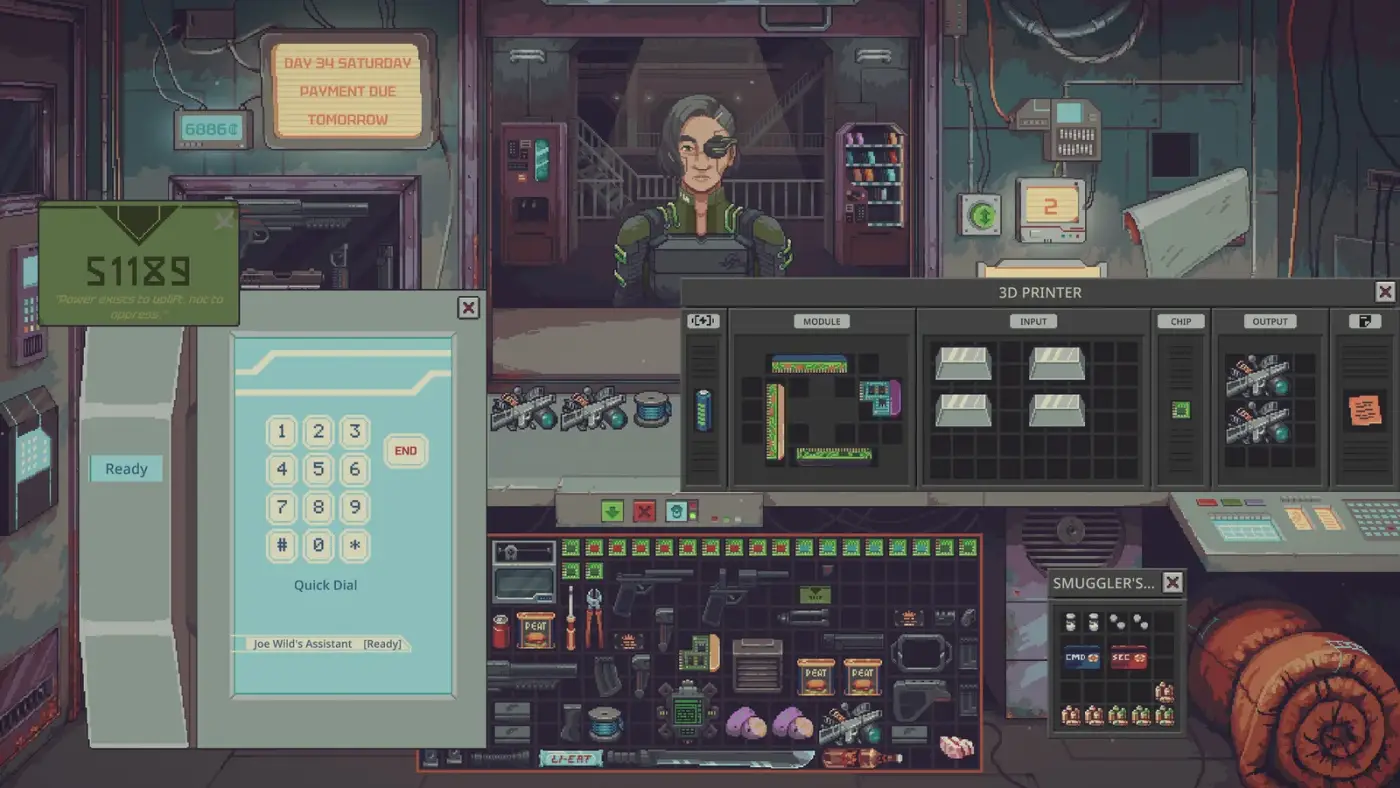
Rent is displayed above the shop with a countdown. When it says “Rent in 5 days” or “Payment due tomorrow,” that is the real deadline. The amount rises over time, and the increase depends on difficulty.
| Difficulty | Rent increase per payment | Vendor permit | Property price |
|---|---|---|---|
| Price Gouge (Cozy) | 2% | 500 | Lower |
| Mark Up (Normal) | 5% | 1,500 | Standard |
| Thin Margins (Hard) | 10% | 2,000 | Higher |
The rent increase is compounding pressure. A 10% increase on a large rent is much worse than a 10% increase on a small one, which is why hard mode punishes slow growth. The permit and property numbers come from the in-game difficulty screen and are fixed mode modifiers, not market prices.
What happens if you miss rent
Missing rent is not just a fee. The game's economy connects rent stress to store attractiveness: a struggling shop attracts fewer customers, and fewer customers make the next payment harder. That is the spiral to avoid.
The exact eviction condition is not documented in the build used for this page. Treat missed rent as a critical warning, not a safe buffer. If you are short, sell fast-moving stock, take appraisal commissions, or delay a production purchase. Do not double down on a slow item.
A machine or a rare item can wait. A missed rent payment can remove the customers you need to recover.
The buyout screen
The buyout is the win condition. When you have enough estimated total wealth and meet the deed requirement, you can buy the shop. The end-of-run screen shows:
- Days survived
- Estimated total wealth
- Buyout price
- Total sales
- Best day
- Best flip
- Biggest sale
- Best find
- Closest call
- Perks selected
- Hours played
A community screenshot shows an Aquafarmer run ending on day 154 with 3,554 credits of estimated total wealth, a 14,600-credit buyout, and 34,165 credits in total sales. That is one save, not a fixed target. The buyout price scales with the property and difficulty, so your number will differ.
The same screen is the closest thing the game has to a scorecard. It rewards both profit and survival: a high total-sales number with a low wealth number means you were moving stock without keeping enough margin.
Why the buyout is not just a savings goal
You could, in theory, hoard cash and wait. In practice, rent and stock requirements make hoarding inefficient. The buyout measures estimated total wealth, which includes inventory and property, not only credits. That means a shop full of valuable stock can be closer to the deed than its cash balance suggests.
It also means a shop full of unsellable stock can look richer than it is. Appraise your inventory honestly. A shelf of fake hands is not wealth.
Choosing a buyout pace
| Play style | Target pace | What it demands |
|---|---|---|
| Cozy | Slow and safe | Water, food, small flips |
| Normal | Steady | One production line plus resale |
| Hard | Fast and efficient | High-value production, low waste, permit management |
| Endless | No finish line | Optimise beyond the deed |
Endless Mode is a separate toggle on the difficulty screen. It lets you keep playing after the normal win condition, which is useful for testing machines and prices but not for a first blind run.
The three levers that shorten the run
- Margin per sale. Buy better, not more. Appraisal is the highest-leverage skill.
- Turnover. A 20% margin that closes in one day beats a 60% margin that sits for ten days.
- Risk cost. A confiscated shipment can erase weeks of profit. Keep contraband away from inspections and display windows.
The appraisal guide improves lever one. The storage guide improves lever two. The crime guide explains lever three.
When to stop expanding
Expansion is not free. Every new machine consumes power, space, and attention. Every new product line adds a supplier, a customer type, and a failure mode. If your current line already pays the rent and funds the buyout, adding a second line is optional.
The best time to expand is when you have a cash buffer, a reliable input, and a buyer pool. The worst time is when rent is due and you are hoping the new machine pays for itself overnight.
FAQ
Can you buy the shop in Probably Stolen? Yes. Buying the deed is the main win condition and triggers the end-of-run stats screen.
How much does the shop cost? It varies by run and difficulty. A community screenshot shows 14,600 credits, but that is not a universal price. Check the buyout figure on your own save.
Does the game end after the buyout? The normal run ends with the buyout screen. Endless Mode is available as a separate toggle if you want to continue.
Is it better to rent forever? No. Rent rises, and the buyout is the intended goal. Staying a renter only prolongs the pressure.
Community source: Probably Stolen store page ↗, in-game difficulty screen (version 052A), a community buyout screenshot, and the Steam Community guide hub ↗. Workshop availability on the Steam Workshop ↗.
Related
More Probably Stolen Guides
Where to buy Probably Stolen chemical supplies, what the common and restricted packs contain, and how heavy metals, contamination and storage work.
A complete Probably Stolen chemistry guide: blender loss, heating plate temperatures, chem finisher contamination, purity tiers and machine module math.
Probably Stolen chemistry recipes with temperatures, yields, purity targets and machine notes for Dream Dust, Nightmare Dust, caffeine and Phanta.
How crime, suspicion, wanted bounties, security records, fixers, and raids work in Probably Stolen, plus how to keep contraband out of a search.
How Probably Stolen customers work: lower and upper level buyers, security, black market, haggling, special requests, and how to match stock to demand.
Probably Stolen difficulty explained: Price Gouge, Mark Up and Thin Margins modifiers, rent increases, permit costs, reputation multipliers and Endless Mode.
Probably Stolen endings explained: the shop buyout win, the end-of-run stats screen, failure states, Endless Mode and what carries into a new run.
Step-by-step Probably Stolen mod installation: subscribing on Steam Workshop, enabling mods, load order, manual installs, updates, backups and uninstall.